otrdiena, 2014. gada 21. janvāris

January homework 1- A Simple Year

The first homework on the course should probably be the easiest one, however, this it probably the one I dread..
It is to declutter the CAR.

Travelling every week forht and back to the countryside, bringing over food, things, bedsheets to wash + a toddler (and all the mess that sometimes comes with it), our car is probably the worst place of all of ours. It's less constant clutter though, it's the things that fall out of the bags or stay forgotten somewhere in the trunk.

I asked for the help of my husband to do it, and we did it over the weekend. Joshua is right, it is a very tight space with a well-defined goal: Get from point A to point B. I'd like to add an extension "and to carry things from point A to point B". But those things you carry should be only the ones you need to carry and then you should take all of them out. There's really  no need to have an extra pair of shoes in the trunk or several water bottles that even with our "refusing to drink bottlet water" sometimes get in (and never leave). And coins! And hairpins! And old papers!!  Gosh..


otrdiena, 2014. gada 14. janvāris

January: Clutter. A Simple Year

I already mentioned before that this year I embark on an adventurous journey called  A Simple Year course that is finally here to remind us that things don't bring happiness, and simplicity is what we need most often to really enjoy our lives, sharing time not things with our loved ones.

January is the month I am to deal with the clutter. I have voluntarily but intuitively already dealt with the clutter in my wardrobe, now I'm reading into the course material to apply it to the rest of the rooms and storage spaces.

Inspiration "Golden Hour" from National Geographic

As Joshua from Becoming Minimalist (our mentor) puts it:

"Ultimately, there are 4 steps necessary to remove clutter and embrace a simpler year: 1) be convinced; 2) believe it is possible; 3) remove the excess; and 4) implement new habits to manage clutter. "

And I agree to him! First I have to be convinced that it's best to remove the stuff and to believe that I can do without it. No matter how green I've strived to be, I'm still one of those old fashioned country style of people maybe, who keeps things just in case I need them (again or ever).. It is kind of green not to throw them away, because I hate filling my trash can. On the other hand, maybe there's someone who actually needs the item instead of just keeping it in the drawer..


ceturtdiena, 2014. gada 9. janvāris

Project 333- my new beautiful wardrobe

This is one of the things on my "The List". I have applied to "A Simple Year" course and look forward to receive the first "package" whatever that may be (for sure not some random things and stuff to clutter our home more).

Meanwhile I have decided to engage in one other project which may be a part of this course- Project 333.

The basic idea is this:

  • When: Every three months (It’s never too late to start so join in anytime!)
  • What: 33 items including clothing, accessories, jewelry, outerwear and shoes.
  • What not: these items are not counted as part of the 33 items – wedding ring or another sentimental piece of jewelry that you never take off, underwear, sleep wear, in-home lounge wear,  and workout clothing (you can only wear your workout clothing to workout)
  • How: Choose your 33 items, box up the remainder of your fashion statement, seal it with tape and put it out of sight.
  • What else: consider that you are creating a wardrobe that you can live, work and play in for three months. Remember that this is not a project in suffering. If your clothes don’t fit or are in poor condition, replace them.

At my personal circumstances I find it a little challenging! So, since I am testing this first without almost any guidance, I am sort of creating some room to maneuvre before (and if) it oficially starts within A Simple Year. My situation is that I live in two places, and it would be terribly difficult to carry all the stuff I might need between the places, therefore I have separate closets in each place. So for now I will keep that way and have the set of 33 in each home, and will continue to bring with me nothing but the clothes on me so in none of the places would be overflow of clothing. The city closet is still cluttered, as I have not yet been there since I started this.
An inspiration- what to do with currently empty hangers :)
But the countryside one cleared out pretty nicely! And I also reduced the amount of home or so called in-lounge clothing to only really neccessary amount of pieces-few short and longsleeve shirts, one lounge dress, one pair of leggings and one capri pants for indoor kitchen/ crawling with toddler/ messy works moments and one "garden jeans". Also the amount of home outdoor winter jumpers is very much reduced to only two to be rotated depending on the temperature outside (there's a harsh difference whether it's around 0 or -20).

Since I do both yoga and dancing which takes specific outfits that cannot really be worn anywhere else, I have kind of a double of the workout clothing set- one for yoga only, the other for dance practice only.

I have a little grim perspective for next season, when the outdoor activities will become more dirty and messy, so that the project will not work so well then. But currently I am still up to it, and testing. My closet looks really, really empty!
An inspiration- what to do with currently empty hangers :)

To dress with even less I have also gone through the items that are not included in 33 list- underwear, socks, tights, pyjamas! I have to admit the success I've never seen in my closet before- I've got rid of many items, I've organized away the ones currently not in use or not in season, therefore also reducing the potential of mess coming back to my drawers I hope!

What I have, well not skipped, but 'alternated' is the way I included accessories and jewelry (apart from the pieces I NEVER take off)- the ones still on the list are now moved to my cosmetics purse, but the rest remain in the larger jewelry box that I've made a pact with myself not to open until the rotation time comes. I have found that I don't use as many pieces as I have, some are left in drawers for ages. So I have put few also in a "give-away-box", but still deciding whether I should try to sell them on some ebay-type of lists or give them the way I usually give things away, or donate in second hand charity shops that will bring an extra good karma.. Since I am saving up now for many not-things of my "save money for.." list, I am still in decision process.

The result- I feel lighter myself as my closet has become clear of things I do not wear (these I donated or the really worn out ones have gone to rugs or crafts), of things that are out of season (I hope it will soon be real Latvian winter), and of things that do not fit me anymore.
It really is a wonderful way to reorganize your mind, emotions and overall feeling!

And I actually can't wait I'm having a free evening in city apartment to declutter my closet there too!


Anyone cares to join me?


trešdiena, 2014. gada 8. janvāris

Waste not! Cooking, stoups and juice pulp..

Recently there have been a lot of posts in the blogosphere and around in social media about the idiosyncracy of wasting the food. There are many ways to preserve food that would otherwise for some reason go to waste, and I have my own three favorite ones.

1. Cook from scartch and eat your food with the next meal, take it in a lunchbox to work etc. 

Even though sometimes that one piece of meat that would be too much for me or three spoons of potatoe mash that my toddler didn't disregarded on the plate, or half a bowl of breakfast porrige, etc.- can all look as "there's nothing I can really do with it", so many people waste. Sometimes I find it ok, if that's part of your pets or animals diet, because you have to feed them well anyway. But even if it would go to compost, I have a heavy heart seeing it dumped, let alone, having it to dump there myself.. Or even worse, to put it in "household rubbish" as in city apartment (yes, unfortunately we don't take our compost part back to the countryside anymore).
But it does not have to be so daunting! You can easily incorporate that one piece of meat and three spoons of mash in your lunchbox to work, or a handful of cooked pasta. I know it would be harder to fit it in your family dinner, but it is very easy to add some larger salad or some other food pieces you like to have wonderful lunch at work! And even bits of oatmeal porrige- what to do with some leftower porrige half a bowl? Add some chopped banana or other fruits or berries depending on a season, and you will have even better meal than just full bowl of porrige. And believe me, there's even nothing wrong to have it as lunch at work, in case you eat breakfast at home all together freshly cooked. Yumm!
It is so easy, and all it takes is to remember that leftowers and bits may make your lunch a special meal from your favorite world cuisines!


2. Make a freezer stoup!

When I stumbled upon the stoup I was surprised at the simplicity of such delight, and I was even more surprised how I did not come to think of it myself! I have been putting forgotten half onions, a little "tired" herbs, crunched pieces of celery, only couple potatoes that we have that moment at home in soups or stews.. But this was next level. Now I too have a stoup box in a freezer- everything that we cannot for some reason finish or incorporate in next few meals, goes to in the box. Bits of meat, sausages, cooked vegetables, pasta, single leftover canned tomatoe, etc. There are also some foods excluded from it- usually sauces and foods including milk or cream.
When the box is becoming fuller or you just want to cook something like that- defreeze the box, fry some spices and extra onion and maybe a grated carrot in butter or olive oil in the pot, add the contents of the box (cut in cubes or pieces if neccessary) and some extra meat or vegs if want to, then add tomatoe puree (home made frozen, preserved or store bought), canned or dry cooked beans and some stock if neccessary for more soupy consistence. It is a hearty, filling meal, and particularly nice if you grate some drying cheese bits that sometimes can be found in corners of the fridge. To make it even more special, serve with toasted garlic butter bread!
Another bonus- sometimes we can't find time to cook recipes that include 10 or more ingredients, no matter how we'd like to. Well, this is a way to do it in no time! And you can make the box contents selective to the recipes you like best, like, being inspired by Rachel Ray for one or another nice stoup!


3. Be creative with the juice pulp! 

Juice pulp is not a waste, it can be a wonderful ingredient! I have shared the carrot pancakes (fritters) with you before. But there are so many more ways to use the pulp! In our kitchen, sometimes it goes into muffins or cakes or breads (these are usually things my mother bake), I incorporate them in soups (especially pumpkin and carrot pulp). My favorites are pumpkin soups with Indian spice. It can even be used in cookies! I promisse to share the carrot and seed mix cookie recipe as soon as we bake another batch, because it would not be fair to post it without the picture, but the first batches just disappeared so quickly..
I recently found some more recipes to use juice pulp, and this is the one that inspired me to post this here too: http://mindfulmomma.com/2013/05/easy-juicer-pulp-minestrone-recipe.html , so thank you, Micaela!
Be creative!


ceturtdiena, 2014. gada 2. janvāris

Happy, healthy and green 2014!

Seasons greetings everyone!!!

It's been as hectic as usually here, maybe even little more than usually. Many things are on my schedule- family, work, school, Christmas crafts, yoga, reading, going outdoors, relaxing with a cup of tea, visiting people and many other important ones.

Even if I have come to think that 1st January is really nothing that gets me thinking of anything else but just regular tradition (Latvian traditions used to count a new year from 25th December, but Chinese year of the Horse has not even started yet), I still want to wish everyone something!


I wish everyone happiness. A friend recently reminded me, that there is no year in passage of time that would bring only nice things and merry events. But happy man is the one that receives with gratitude and smile on the face and in heart all he is given. So I wish you happiness in 2014!

I also wish you all good health in all mind, body and spirit! May the Horse bring you strength, endurance, playfulness and harmonious beauty of the nature!

And, of course, I wish you a green year! I do hope that the Green Horse will bring a lot of green ideas, inspirations and works in people all around the world!

This year I am doing something that I have never seriously done before yet- I am setting a list for myself.
9 is a very meaningful number in various traditions- yoga, Latvian pagan tradition (that I hold very dear to my heart) and others. Therefore this year I am setting a list of 3 sections of 9 things "to do" for myself or what I would like to call them better- Inspiring Reminders of what I do and should do, whether they are the principles to live by or exact number of things that must be done in certain time.

I promise to myself that I will

Personal:

  1. Live honoring Latvian traditions
  2. Live honoring Namaste
  3. Do yoga every day
  4. Meditate every day
  5. Eat more raw every day
  6. Fresh juices and smoothies every day
  7. Sing every day
  8. Read 26 books this year
  9. Receive and make the miracles come to life


Family:

  1. Say loving things to my loved ones every day
  2. Inspire myself and others every day
  3. Be more simple and more attached parent
  4. Spend more quality time with my family doing things together instead of along each other
  5. Welcome more new ancient Latvian traditions and wisdom in our lives and home
  6. Teach the love to yoga to my daughter
  7. Dance with my husband
  8. Cook something special for my loved ones once a week
  9. Make home

Do-And-Learn:

  1. Reduce the clutter in my life and surroundings
  2. Try myself on Project 333
  3. Learn to live a simple life with help of A Simple Year course
  4. Learn 2 new skills this year
  5. Sit 3 exams for my university this year
  6. Write a blog post every month
  7. Make a craft every month
  8. Make 1/3 of Christmas gifts by October
  9. Grow something unusual this year

Do you have "The list"  this year? I hope mine will serve me as a good reminder of the things that are important to me for the moments I become a little lazy or forget to fill all my cups! 


pirmdiena, 2013. gada 11. novembris

In praise of Slow- review

It was couple of years ago when my friend gave me a great present on my birthday-  a book 
"in praise of Slow. How a worldwide movement is challenging the cult of speed" by Carl Honoré. He is an award- winning London living Canadian journalist and TED speaker, and mainly, he is a world's ambassador for the  Slow Movement.
So what really is a Slow Movement? By his words:

"It is a cultural revolution against the notion that faster is always better. The Slow philosophy is not about doing everything at a snail’s pace. It’s about seeking to do everything at the right speed. Savoring the hours and minutes rather than just counting them. Doing everything as well as possible, instead of as fast as possible. It’s about quality over quantity in everything from work to food to parenting."

Even though I preach several aspects of Slow Movement in my daily life, I still have loads of areas to improve. This book was insightful. I believe readers on green carpet might find it interesting too.


He starts by examining our need for speed, compulsion to accelerate and hurry in everything we do. Why do we do everything faster? Author questions the (in)sanity of speeding up everything in our lives. Meanwhile he goes through the history of how clock became to control our lives.

In the chapter Two he shows that "Slow is Beautiful" by introducing cities and communities that choose to defy te speeding up industry and have become The Decelerators.

In the chapter Three "Food: Turning the tables on speed" he is taking you to a tasty and nice smelling journey, introducing the Slow Food idea, advocates and activists. I particularly love the part when he tells about Rome and how Carlo Petrini launched Slow Food there. "As the name suggests, the movement stands for everything that McDonald's does not: fresh, local, seasonal produce; recipes handed down through the generations; sustainable farming; artisanal production; leisurely dining with family and friends." Carl is also reminding that Slow Food is an "eco-gastronomy", it means eating well not only for your pleasure, mind and body, but also for the environment.

I think chapter Four "Cities: Blending old and new" is one of my favorites. Even though apart from very few areas our  cities look a lot like his vicious examples, I enjoyed the virtual tour through Citta Slow and seeing how New Urbanism principles are applied elsewhere turning it to "Slow Urbanism". When you take a closer look on the infrastructure details of how the city or suburbs should be built according to their ideas, it is very close to the eco-village ideas.The book is also giving a good thought on Speed Awareness- how we drive our cars and how we should do that not only for Slow living idea, but for our own and others safety and opportunity to enjoy the life in living areas.

Chapter Five "Mind/Body: Mens sana in corpore sana" leads you to slow thinking and reminds of such important practices as meditation, taking time to reflect and calm your mind from the frantic jumping of thoughts. Also physical excersise is very important part of living quality life, especially slow life. Since yoga is big thing here on green carpet, I like him emphasizing the importance of it in the book too. Some interesting aspects of Eastern Chi Kung traditions appear in lives of ordinary and very dynamic sports. Slow doesn't mean that every movement has to be at a snails pace. What was totally new to me was this SuperSlow gym. I would not be ready to try it since I, just like the author, like to enjoy my practices, but I definitely understand the people who like it- it's slow in dynamics, but "fast" in terms of time saving, and it clears the mind too.

Next chapter "Medicine: Doctors and Patience" talks about the issue probably every one of us has encountered- fast paced visits in the doctors office. Although author shows some examples where Western doctors are taking more time for their patients and talk more, in reality it is still a huge problem. Therefore he goes on to discuss various CAM techniques. Most of the readers will probably already know such treatments as massage, chiropractic, osteopathy, aroma therapy, acupuncture, yoga, meditation and power of a simple relaxation. What is a nice touch in the book is introducing Reiki as a medical treatment, and I was actually amazed to read about how developed that is in London, for example. If I just knew that when I was living there! I believe this chapter would encourage more people to try out herbalists, Reiki masters and other now called "unconventional" in my opinion, the true traditional doctors, because true health is most often very little linked to medicine.

A little delicate chapter seven "Sex:A Lover With a Slow Hand" moves Slow movement to your bedroom, introducing slow foreplay, movements and surprising or not- Tantra. Important are the ways to communicate such a delicate idea as slow sex. We all do it, we all know it, but we still don't really feel very encouraged to talk about it, especially in terms of "how to do it better" rather than "look what I can do!".. What I really enjoy about the author that he goes through all the experiences himself, so he can really tell what's in it. Thanks to this book I've had few thoughtful moments about my own relationships.

Chapter eight "Work: The Benefits of Working Less Hard" probably is the most difficult part of the Slow movement and provides many examples how being slow at work and working less can be good for both life and business. Not always the reduced hours or extra time off works for everybody, of course. But the trend to slow down and take more time for the life outside of work has been set and proven to have many benefits. I really enjoyed seeing various examples on how to create work-life balance and to slow the often frantic working environments- from reduced hours to job sharing, to choosing the pace and time when you work, to yoga and meditation on the job, and even snoozing in the middle of the working day. I think we have lot to learn from those examples to find what works for us. I also believe this is the most complex area where slowness can be achieved as it is not depending only on ourselves but also many other people- colleagues, CEOs, bosses, managers and other businesses that all have their own expectations of their colleagues, employees and partners. This chapter now has been one of the most important ones since I started working.. recommendation to everyone who is tired of hectic office rush.

The next chapter "Leisure: The Importance of Being at Rest" shows how our leisure can and should become more slow. Various hobbies from knitting to gardening (believe me, not women only activities) can have immense effect on you slowing down and therefore improve your concentration abilities when you need to be active. It kind of takes your mind off the jumping thoughts, tested and proven. While reading all that I thought- I should read this book even slower.. and then the author said that another leisure revolution is a slow reading! Some music lovers might find the continuation of the chapter captivating, however, I, being also a music lover, think that the section on playing music slower was a little too long (slow?). However, the idea of endless or at least way over our lifetimes long concert was something new and kind of exciting!

Following chapter "Children: Raising an Unhurried Child" covers how the Slow lifestyle could and should (!) be applied to our family lives, especially to how we rise our children. Nowadays parents try to pack their children's days with as many activities as they can to provide best start in life. But it is crucial to give them time to develop at their own pace, to enjoy the free play. Author is also describing alternative education methods and homeschooling as a trend that complies with Slow movement. Now I'm even more and more attracted to the idea of homeschooling, but since I'm not sure whether our family could be able to do that, I still have my little one signed up for Waldorf kindergaden when the time comes and have some other alternative schooling institutions in mind..

Those thinking of applying slow movement into their own lives have probably already gone to book store to grab a copy of this piece, but what I have to say to skeptics- many of us  like our busy lives, but this book just shows how to improve the quality of life too!

P.S.- This was the slowest book I've ever read- and I enjoyed reading it page by page for many, many months before bedtime. I am now thinking of which next slow book to read!


trešdiena, 2013. gada 25. septembris

Stockholm, Sweden- learned and experienced

It is not just because of some distant ancestoral Swedish blood in me that I fell in love with this city..
Yesterday morning I arrived here for the IPCC Twelfth Session of Working Group I. While all the day I was in the room with many people discussing Climate Change data, and I am continuing it today and for the next couple of days too, I have got to know many very inspiring and also in some sense satisfying things about Sweden and Stockholm in particular.


Some learned information: 


  • Stockholm was the EU Green Capital 2010: 


  • Stockholm has done plenty to become sustainable, and it has a plan to do much more: 

The Environment Program contains six key priorities:
1. Environmentally efficient transport
2. Goods and buildings free of dangerous substances
3. Sustainable energy use
4. Sustainable use of land and water
5. Waste treatment with minimal environmental impact
6. A healthy indoor environment
Other priorities of the Environment Program are to encourage cycling and walking, reduce out and indoor noise levels, increase the amount of ecological food products purchased by the city to at least 25 percent, reduce greenhouse gas emissions to less than 3,0 tons per Stockholmer, develop and strengthen land and water areas with particular importance for biological diversity and reduce incorrectly recycled waste.


  • Sweden has 16 Environmental Quality Objectives:


  • Reduced Climate Impact
  • Clean Air
  • Natural Acidification Only
  • A Non-Toxic Environment
  • A Protective Ozone Layer
  • A Safe Radiation Environment
  • Zero Eutrophication
  • Flourishing Lakes and Streams
  • Good-Quality Groundwater
  • A Balanced Marine Environment, Flourishing Coastal Areas and Archipelagos
  • Thriving Wetlands
  • Sustainable Forests
  • A Varied Agricultural Landscape
  • A Magnificent Mountain Landscape
  • A Good Built Environment
  • A Rich Diversity of Plant and Animal Life


  • Some experienced things: 


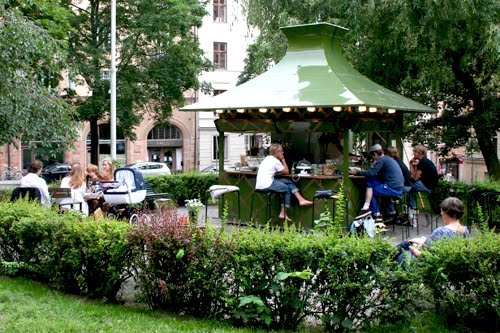
    • Stockholm takes care of its citizens and families by caring and developing green common spaces between the residential buildings, where you can see people actually coming together for BBQs and chats, and by designing the city with good access to public services like shops, busstops, daycare centers, common gardens, eat out places etc. 


    • At least one hotel in Stockholm has a wonderful environmental and 'health' standard apart from not changing the towels- Clarion Hotel in Stockholm serves plenty of fresh and organic food for breakfast, which makes me very, very happy. And my towels really were not changed during these 3 nights of stay as I left them on the hanger (which many other hotels in my experience ignore no matter the signs in the bathroom saying- we won't change them, we care for nature). 

    • People cycle, walk, run to the places they have to be- daycare for children can be found on the first floor of one of the residential buildings of the cluster, bycicles are everywhere - parked near apartments, being cycled on the streets etc, dogs are walked around the green areas that are quite common in my 30min walk to the venue I have to be, and plenty of dads are running with kids in strollers to get where they have to be.. leaves a warming impression of people-friendly city.

    • And what I probably love the most of these- Swedish people has this Scandinavian sustainable consumers pattern- they use things up, they wear them out. I see smart looking people pushing strollers that they have been probably pushed around themselves (or even their own moms and dads were the ones riding them). They don't ride oldschool bykes, they ride old bykes. They seemingly dress for quality and convenience, and they are not stuck up with superlarge wardrobes of incredible variety of rags from the latest trends. Simplicity really describes what I see around, and I love it. There is no pressure to artificially make you more good looking, the way of appearance is natural, and I miss this Scandinavian trait in my own country. No wonder they got all the above points set up.
    While this pic was taken from treehugger about Iceland, I've seen the same ones and similar here in Sweden, but I did not want take my camera out to take a photo of a bypassing toddler in a stroller or baby in a pram..


    These are just few I've encountered on my short visit here with a very, very limited time outside of the meeting room. I can only hear even better stories of other cities of Sweden that are even better by not losing the all the good standards but adding to them by being more relaxed, friendly and good looking. I hope I would have some time to visit Uppsala and Gothenburg to find it out one day.


    It almost feels like I would want to take the easy route and move to work to some place like this (and for curiosity- one of the positions I was attracted to when thinking of starting working was really based in Stockholm). 
    However, I love my family, my country and my own environment a lot. And I find this experience incredibly inspiring to do some improvements in my own city surroundings. I hope that ultimately I will live in the countryside, but while part of my life is spent at our city apartment block, there are several things I've already discussed with my husband that we could do for our neighbourhood. 
    Which me luck!