Rāda ziņas ar etiķeti event. Rādīt visas ziņas

trešdiena, 2013. gada 25. septembris

Stockholm, Sweden- learned and experienced

It is not just because of some distant ancestoral Swedish blood in me that I fell in love with this city..
Yesterday morning I arrived here for the IPCC Twelfth Session of Working Group I. While all the day I was in the room with many people discussing Climate Change data, and I am continuing it today and for the next couple of days too, I have got to know many very inspiring and also in some sense satisfying things about Sweden and Stockholm in particular.


Some learned information: 


  • Stockholm was the EU Green Capital 2010: 


  • Stockholm has done plenty to become sustainable, and it has a plan to do much more: 

The Environment Program contains six key priorities:
1. Environmentally efficient transport
2. Goods and buildings free of dangerous substances
3. Sustainable energy use
4. Sustainable use of land and water
5. Waste treatment with minimal environmental impact
6. A healthy indoor environment
Other priorities of the Environment Program are to encourage cycling and walking, reduce out and indoor noise levels, increase the amount of ecological food products purchased by the city to at least 25 percent, reduce greenhouse gas emissions to less than 3,0 tons per Stockholmer, develop and strengthen land and water areas with particular importance for biological diversity and reduce incorrectly recycled waste.


  • Sweden has 16 Environmental Quality Objectives:


  • Reduced Climate Impact
  • Clean Air
  • Natural Acidification Only
  • A Non-Toxic Environment
  • A Protective Ozone Layer
  • A Safe Radiation Environment
  • Zero Eutrophication
  • Flourishing Lakes and Streams
  • Good-Quality Groundwater
  • A Balanced Marine Environment, Flourishing Coastal Areas and Archipelagos
  • Thriving Wetlands
  • Sustainable Forests
  • A Varied Agricultural Landscape
  • A Magnificent Mountain Landscape
  • A Good Built Environment
  • A Rich Diversity of Plant and Animal Life


  • Some experienced things: 


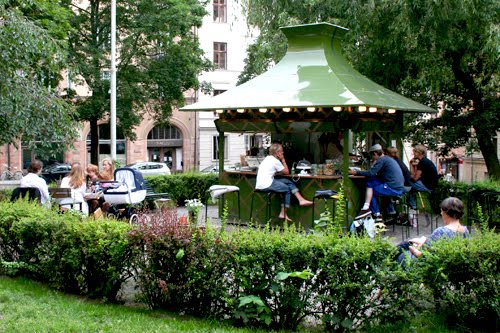
    • Stockholm takes care of its citizens and families by caring and developing green common spaces between the residential buildings, where you can see people actually coming together for BBQs and chats, and by designing the city with good access to public services like shops, busstops, daycare centers, common gardens, eat out places etc. 
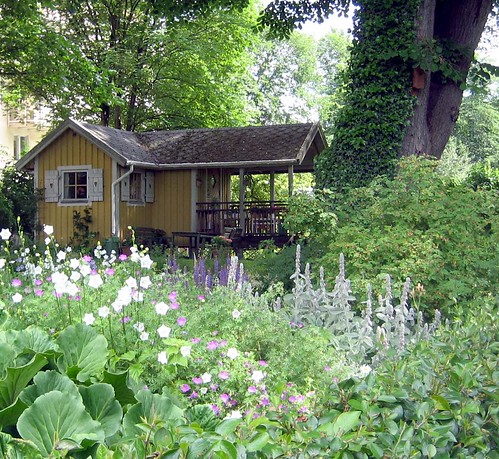


    • At least one hotel in Stockholm has a wonderful environmental and 'health' standard apart from not changing the towels- Clarion Hotel in Stockholm serves plenty of fresh and organic food for breakfast, which makes me very, very happy. And my towels really were not changed during these 3 nights of stay as I left them on the hanger (which many other hotels in my experience ignore no matter the signs in the bathroom saying- we won't change them, we care for nature). 

    • People cycle, walk, run to the places they have to be- daycare for children can be found on the first floor of one of the residential buildings of the cluster, bycicles are everywhere - parked near apartments, being cycled on the streets etc, dogs are walked around the green areas that are quite common in my 30min walk to the venue I have to be, and plenty of dads are running with kids in strollers to get where they have to be.. leaves a warming impression of people-friendly city.

    • And what I probably love the most of these- Swedish people has this Scandinavian sustainable consumers pattern- they use things up, they wear them out. I see smart looking people pushing strollers that they have been probably pushed around themselves (or even their own moms and dads were the ones riding them). They don't ride oldschool bykes, they ride old bykes. They seemingly dress for quality and convenience, and they are not stuck up with superlarge wardrobes of incredible variety of rags from the latest trends. Simplicity really describes what I see around, and I love it. There is no pressure to artificially make you more good looking, the way of appearance is natural, and I miss this Scandinavian trait in my own country. No wonder they got all the above points set up.
    While this pic was taken from treehugger about Iceland, I've seen the same ones and similar here in Sweden, but I did not want take my camera out to take a photo of a bypassing toddler in a stroller or baby in a pram..


    These are just few I've encountered on my short visit here with a very, very limited time outside of the meeting room. I can only hear even better stories of other cities of Sweden that are even better by not losing the all the good standards but adding to them by being more relaxed, friendly and good looking. I hope I would have some time to visit Uppsala and Gothenburg to find it out one day.


    It almost feels like I would want to take the easy route and move to work to some place like this (and for curiosity- one of the positions I was attracted to when thinking of starting working was really based in Stockholm). 
    However, I love my family, my country and my own environment a lot. And I find this experience incredibly inspiring to do some improvements in my own city surroundings. I hope that ultimately I will live in the countryside, but while part of my life is spent at our city apartment block, there are several things I've already discussed with my husband that we could do for our neighbourhood. 
    Which me luck! 


    trešdiena, 2013. gada 5. jūnijs

    World Environment Day

    Today is the World Environment Day, and we are going to celebrate it on green carpet too!


    I was thinking of what activity would be the best for our family and our planet..
    And I realized that I just simply have to address the two concepts of what UNEP has also suggested- Sustainable consumption and Food waste!

    So this is what I registered at UNEP as my activity:

    The change starts at the grassroots level right? So I am starting there- with myself and my family. I am discussing how food production impacts the Environment and what we can do, especially discussing food waste. Even though my mom assures we don't have much food waste since we have pets and grandmom nearby has also hens and ducks, and my mom has a worm compost "farm" too.. but still- I am on the path of finding the ways to show my family how every scrap of food can be used and how leftowers can be incorporated in further meals.. In addition I am talking with them about reducing store bought produce, reducing bread, meat and ready made items, and even reducing cooking and benefits of eating more raw food! It might not help saving hungry children in developing countries, but what we must change is the overall eating patterns of our whole planet, especially "the West".. 


    Copyrights BERAS
    Additional motivation for this I also found in Tallinn last week where I attended Policy forum on BaltAdapt project, and one of the participants was presenting the BERAS- Baltic Ecologycal Recycling Agriculture and Society and the concept of a Diet for a Clean Baltic:
    As a consumer changing what you eat is the most important action you can take to save the environment. The following criteria can guide your choice of food weather you are an individual consumer, a professional responsible for purchases in the public sector, or running a restaurant.

    First of all the food should taste good and be healthy. Organic food is good both for us and the environment. Local food and food according to season minimise transports and support our local producers. Most likely seasonal food will also cost less and give us the opportunity to stay more connected with our natural environment. Leftover food is a waste of energy and we should try to reduce it. Producing vegetables and grains is much more energy efficient than producing meat. Therefore reducing our meat consumption is the most important thing we do.

    We call it Diet for a Clean Baltic.

    In short, Diet for a Clean Baltic means choosing food that is produced within the natural boundaries of our ecosystem.


    I'm in!!!
    So- eat organic, eat local, eat seasonal, eat vegetarian and I would also like to add- eat raw!
    I don't mean that you have to go 100% on any of these at once, but just start replacing step by step, introduce the good things and you'll see how the bad ones fall away real quick ;)

    Let's eat food that's good for yourself, your family and your planet!


    pirmdiena, 2012. gada 18. jūnijs

    Rio+20 events

    Online space is buzzing with events, actions, movements, discussions, conferences, blogs, news on Rio+20 topics. 13th June also held one such event here in Latvia- discussion on Rio+20 with political representatives and civil society. Thanks to homo ecos: for the event!
    Some thought provoking moments, ideas and statements that were shared there:

    • Mr Edmunds Sprūdžs, the Minister of Environmental Protection and Regional Development, says that Latvia has achieved a lot already, so his speech will most probably be selling 'ourselves', showing off the progress. He believes that Latvia could try a little 'aggressive' tactics when asking others to act towards sustainable development. Mr Sprūdžs hopes to give a speech that will make others to remember Latvia after the conference. 
    Well, we don't even recycle properly here. We don't have hybrid or electric cars on our roads. We have hardly few places where renewable energy like sun and wind is collected.. I don't think we can rest on what nature has given us per se like biodiversity and forests. Latvia is a beautiful, green country and we try not to spoil it. But I would not say that we have progressed that much, even though Yale says so.. 
    • Both Mr Sprūdžs and Mr Jurijs Spiridonovs who also represented political side of panel, both agreed that most important for Latvia will be meeting other leaders of states, bilateral meetings with for example Japan, and meetings with various NGOs. Connections is going to be the biggest gain from the conference rather than a document or speeches. 
    I could agree that meetings, connections are going to be most important, since I'm not so optimistic on either the necessity or content of a new document or those speeches there. It's all political blaaahblahablaaah that we are expecting from there, unfortunately. What I really hope for is that governments and Mr Sprūdžs himself as well are going to take on board what Civil Society has to say, what we, people, have declared we want for our future in documents like we created last July here, and thoughts that are played in videos, statements etc. 


    • Mr Jānis Ulme from Zemes Draugi- Friends of Earth in Latvia- had more down to earth approach reminding us about the various dangers on what's going on in Rio. One of them is talking about Green Economy that has no definition or real meaning, everyone uses this label on whatever he decides with no regulation, so basically it means just blahblahblaaa again. Negotiators on the outcome document can't agree on text yet, so that shows a lot. Another risky point is the perception that we need a new document. We don't, we haven't yet managed the previous ones, we just put them somewhere aside without saying. 
    I can totally relate to all what Mr Ulme said in these terms. One of my university teachers once said- we don't need to start writing a new convention, we need to start implementing the existing one and it will have immense effect (we were discussing genocide, war crime, torture topics). What happened to conventions our predecessors agreed on 1992? What about the Agenda 21? The new document should be an agreement to bind us all together to actually implement those, fill the criteria. 

    • Mr Ulme and Ms Ērika Lagzdiņa, director of Regional Environmental Centre for Eastern and Central Europe, both had some discussion on the participation of the civil society in Rio and decision making processes on sustainability issues. While Ms Lagzdiņa mentioned that original Earth Summit was a revolutionary moment when finally public voice was taken into account, Mr Ulme reminded Copenhagen and latest occasions when NGOs and acting individuals were not only left out of the process but also denied the access and their right to express themselves. 
    I must admit this was one of the most scary thoughts- that our ideas, our actions would not be heard, not taken into account? I felt so sure, knowing, that there's this buzz around Rio+20, events and actions taking place during at least a month, not just those two days in June... should we feel worried that our documents are never read, videos never seen, statements not taken seriously? I hope not and I am positive that this time 'they' will hear us. 

    20 Years ago 'they' agreed that Climate change is real, environmental damage, depletion and poverty is real and it is time to change our habits, our lives, time for sustainable development. Unfortunately they did let the large oil money color their glasses, they let enormous TNCs (Trans-National Companies) to lead their greedy way instead. This is the very last moment to stop it. This is the last train we must jump in to be able to                                                grant our grandchildren their future. 
    I don't want to be remembered by my kids as one of those people who "could have made a difference". I don't want to be one of those who let others make wrong choices that will destroy our planet and take the chance of life away from our future generations. 
    We all have to do something. And some of those things are not going to be easy. That's why we have those governments "up there"- to help us do it. We just have to ask them. Louder and probably many times. But we should ask them as many times as it takes- we want sustainable future, fair, clean and balanced lives. 


    ceturtdiena, 2012. gada 14. jūnijs

    Twitter Storm #EndFossilFuelSubsidies

    All the people on green carpet, it's time to act!
    I have joined the Twitter storm

     #EndFossilFuelSubsidies

    and I encourage you to do the same!

    I love this time when the buzz around all climate, environment and sustainability issues are high on media, in civil society. The events are overlapping and there are more than you can attend or manage to follow due to Rio+20.
    But this is such an easy one to participate and you do know that those little things brought together creates an enormous force, right? So this is one of the little things everyone can do to stop subsidizing things we want to delete from our future scenarious- climate change, dirty fossil fuels, unfair resource management...
    Join the 350.org  Twitter storm here and make yourself heard, let the power players know that you want green energy, green jobs and simply - clean and green life for yourself and for your children!

    On their Facebook page Mr Ken Winkel posted a Greek proverb, “A society grows great when old men plant trees whose shade they know they shall never sit in.” adding that  Now is the time and these are the old men who shall prove their greatness or their greed.

    I couldn't agree more! But I also think that this is the time that we, all who care, especially young people, remind those 'old men' to make the right choice!


    If you are still in doubt, check this info graphic by Priceofoil.org and think whether you really support it?


    Make the right choice! Ask for the accessibility to greener energy. I still have to drive my regular car here in Latvia to get somewhere. I do car pooling, econ/ecol driving, route planning.. but it's not gonna help in long term. I wonder, when we will be able to feel some change in that...  Rio+20 might show the way to some! 


    pirmdiena, 2011. gada 3. oktobris

    Moving Planet Latvia- Uzlādē pasauli!

    Last Saturday Moving Planet shaked the whole Planet and it was also here on green carpet. We visited the action organized by Homo Ecos:  "Uzlādē pasauli" at Kalnciema kvartāls. °

    There were information desks about renewable energy, posters about how to reduce our impact on Planet and climate and other topics, there was also Eco Catering cafe offering very tasty creme brulees and other yummies, animation workshops for children, poster workshops for adults. If you came earlier you could have listened the lectures on how to take care of your bicycle, but we missed it. Indoors you could watch some videos on environment and climate with a nice cup of herbal tea in your hands.

    Few other very entertaining things were testing hydrogen car, "cycling music"  and "cycling milkshakes", where you could either listen to the music or make your own milkshake by powering everything by cycling! These two were most popular in the event.


    The big finali was the "wedding" of those who ride bicycles and those who drive cars with the promise of eternal friendship and respect to each other on the road. I must say, that is still a big issue here in Latvia and I am happy that quite many people attended this event. Even though, we can always wish for more, right? Well, at least I went home with the white ribbon attached to our car!

    Someone in the public on the event said something like "green movement in Latvia is doomed".. I do not agree. It's just very new and our society is learning about green stuff quite slowly.. But we do need those baby steps! And such events are tiny little steps which will bring the society closer not only to "I'm green in my own way at home" but also to public actions, involvement, saying it out loud. Here in Latvia people tend to keep their good practices to themselves, they do not go around telling others- I switch the lights off, I cycle, I recycle, I eat local, I have solar panel etc. They are shy in a way. I believe the problem is the society at the moment- all about money, consumerism, "easy" lifestyle that uses whatever they have available not thinking about the impact on the planet. That is the reason "green people" do not tell. Because their parents, friends, colleagues are all sucked in this consumerism lifestyle that says "I do it because I can. I use every resource  just because I can. I buy whatever I want (not need!) because I can. I drive 2min to the shop because I can. etc". So we are kind of scared of what people will say or think of us. But that is the main problem of green movement in Latvia. And maybe in more places in the world than we think.. To change the mindset of the world we have to share these practices, our habits, ideas and suggestions. We have to meet in such events and discuss it, see other people doing the same thing. Only then we can really Move the Planet! So good luck to organizations creating space for such events! And to all of us- sharing our ideas not only with like minded people, but also with those who do not agree and those who do not care!

    otrdiena, 2011. gada 13. septembris

    European Youth Meeting 2011 for Sustainable development - follow up document

    It's been quite a while after European Youth Meeting for Sustainable development, however, today I am writing a report of the event for Homo Ecos and wanted to share long ago promissed document we created in Tallinn.
    So here it is:  EYM2011 Declaration to the UN Rio+20 Conference .  To remind- the part worked on green carpet was Urban Development (see previous posts).
    I also wanted to share some fun part of our activities- movie about Klipučevo, green (to-be) city and its mayor, and share some good ideas and funny interpretations :) Enjoy watching!

    trešdiena, 2011. gada 23. marts

    Emissions Trading Scheme, Low-carbon investments and new import taxes..

    Earlier today there was a discussion on green carpet that took place in the UK Parliament on the European Emission Trading Scheme (ETS), carbon price floor and low-carbon investments. Very interesting one indeed!Especially as it's tomorrow when it will be decided whether UK will stick with the ETS or set its own benchmarks for carbon prices.
    All Party Parliamentary Climate Change Group and Climate Strategies organized event with the Chair, Lord Whitty, former Labour Sustainable Energy Minister and speakers Dr Karsten NEuhoff, director of Climate Policy Initiative Berlin, who presented the analysis from the joint CLimate Strategies and CPI project "Carbon Pricing for Low Carbon Investment"'; Jeremy Nicholson, Director of the Energy Intensive Users Group, who spoke about the perspective from UK Industry; Peter Ainsworth, Conservative Party DEFRA spokesman (2005-2009), who was telling about the UK Political Context and Professor Michael Grubb, Chair of Climate Strategies, who spoke on the International Context.

    Dr Karsten Neuhoff was speaking on few aspects of EU ETS, like, if and how does it capture the attention of the businesses, does it provide enough clarity to decision making for businesses and does it have impact in these decisions? Well, first- yes, it does capture the attention, especially in companies that have higher expectations of the future stringency of premit allocation. If they know they'll have to pay full carbon price later, they are more likely to invest in low caron innovations now, which is a ood thing. However, EU ETS is not very clear and some aspects like free allowances, changes that are due to take place and timing is badly understood. Most of the companies assume that they need maybe just some changes to comply with standards, which is not entirely true. The actual costs of the carbon allowances are also unclear as they vary between companies, sectors and even countries. Another risk is that most enterprises are looking only for short pay-back, like investments in energy that are returned in less than 4 years. Such assumption might be wrong and I think also diminish the importance of EU ETS. At the moment there's also a risk of very low carbon prices and lots of misunderstanding of free allowances and trading them. You won't be able to get or trade them in 20 years for the same price as today, and that should also be made clear. As the reason of this whole discussion today on green carpet was because UK is deciding weather to go with the EU Climate Change policy or to set their own minimum price for carbon from 2013?
    Dr Neuhoff is also asking an important question here- is the Climate Change policy actually united in the EU? Obviously, small countries might find it quite challenging to work on these problems, so they would be better off to work toether within the EU. But what about the big countries like UK or Germany? Well, according to his paper presented here on green carpet- we all, big or small, should stick together. It is a very important issue- setting of the carbon price floor (it is a mark of the lowest cost of burning fossil fuels to generate power), as it protects investors from risks of very low carbon prices. With this risk removed, investors should be more prone to invest in low-carbon innovations, businesses and programs. The problem here is that with removing itself from the ETS, UK risks of actually exposing itself to higher energy prices than as if it stayed in the ETS, Dr Neuhoff argues.
    Another risk of separating UK from the ETS is scaring away the utilities investing in the UK and other EU countries, like RWe, E.ON and EDF, he says, as they will be more likely to stick with the ETS carbon prices. And in return for the ETS it is important that UK stays and supports it, if we want it to be strong and highly valued within the EU. Dr Neuhoff suggests that most benefitial strategy for the UK would be to stay with the ETS, and instead of putting effor on national policy instrument UK should negotiate and press on moving beyond 20% emission reductions targets for 2020 within all of the EU. That would give much more solid framework and consistency to both countries and investors. UK has been one of the most supportive of ETS, let's hope it will be not turning away but pressing more with its interest on the carbo price floor to create more stringent ETS.

    Jeremy Nicholson took the debate a little further to talk about how industries feel about the UK's plan of carbon price floor and low-carbon investmets. One huge worrying issue here is a carbon leakage- the industrial groups might just move their production elsewhere, where they do not have to pay for emissions. What if instead of 'decarbonisation' we get 'relocation'?  The target of any of the two schemes is to work out carbon prices reasonaly to save both the planet and the economy- to keep industries where they are. What matters for the industry is relative price of energy, and it's not attractive to investment if the energy price is higher than to its competitors. And this can be really problematic for the intensive energy users, like steel production and other industries. There must be a balance for them to adapt to the renewable energy and prices, and Nicholson warns the UK not to drive these industrial groups and investors away to the places (in this case- rest of the EU), where carbon floor price is a bit lower.

    Peter Ainsworth was shortly discussing political context and focused more on international political perspective- questioning whether there is possible global economy of decarbonising? The EU memberstates should work together to provide a strong leadership for global decarbonising processes. Unilateral implementation should not diminish but drive and invest the effort in the ETS. But first it has to be made really clear and proven that green technologies is a safe place to invest. The financeability of the 'green deal' (scheme that's offered to households to get money for securing greener energy etc) must be proven. Basically all green innovations, incentives and schemes must be crosschecked for safe investments for also ETS to work. And it is important, the ETS should be robust, effective, and Ainswort dares to say- exportable as a global product. But first of all - every market needs a certainty. Unfortunately at the moment politicians and parties do little or nothing on Climate Change for various reasons comparing to what they could and should do having their opportunities.
    Professor Michael Grubb agreed that nothing in science shows that the situation is less dangerous, but politics show that people are still not taking it serious enough. It is an economically and politically complex issue and it's challenging the old model in which countries would come together and discuss who is responsible and who should do what. It's not working anymore that way between countries, and another problem is that societies don't take up this model either. He then returned to the failures of both guns blazing and soft approaches of Copenhagen, but admitted that Cancun was a great achievement. Not big enough, as it had huge gaps on what's possible and what's yet not. Professor Grubb like Nicholson is worried that carbon price floor might not bring the low-carbon investments in the UK, but drive high carbon investment away- same leakage problem that is massively underestimated, and it is a transnational problem. So I believe UK should try to solve it together with the rest of the EU. Another problem is investment leakage- companies tend to think that there will be free allowances also in 20-30 years, which is not going to happen, so the low-carbon investment and innovations are needed now. But industries can't do it alone, they must get the support and government policies should pay the attention to that.

    Professor Grubb also added another very interesting idea, which is very supported on green carpet- import taxes on those who don't pay carbon taxes. I think it's amazing! If the EU sets the carbon price floor and works on more stringent ETS, then it would fit in perfectly to impose higher import taxes to the countries or transnational companies tha do not pay for their high emissions. I'm really backing this. I think this was the most impressive thought from todays discussion. It would also benefit another very green strategy: choosing local production and services. And it also will improve all national and regional economics.

    But returning to the question that the UK might separate from the ETS- I agree with Dr Neuhoff that UK should rather put more political weight on higher benchmarks in the ETS than setting its own.
    Another gain from this meeting- quick networking and contacts in Climate Strategies, which is "an international organisation that convenes networks of leading academic experts around specific slimate change policy challenges. rom this it offers rigorous, independent research to governments and the full range of stakeholders, in Europe and beyond."

    Now- back to my decaf fair trade coffee with organic milk and some relaxation with my baby and kitten :)